Visiting Bali is more than enjoying its beaches, rice terraces, or vibrant arts; it is stepping into a living culture where ceremonies shape daily life. For the Balinese, rituals are not occasional events but the rhythm of existence, woven into the cycles of the calendar, the phases of the moon and sun, the seasons, and even the rice fields. To understand these ceremonies is to glimpse the islandʼs soul, where spirituality and daily life are inseparable.
The Balinese calendar is unique because it operates through two separate, parallel, and non-synchronized systems: the Pawukon and the Saka cycles. The Pawukon calendar is a fixed 210-day cycle composed of overlapping week systems ranging from one to ten days. It is used primarily to determine the dates of most Balinese Hindu festivals, temple anniversaries, birthdays (otonan), and auspicious days for daily activities. Unlike many calendars, it functions independently of the moon or sun phases, creating a distinctive rhythm of ritual life. In contrast, the Saka calendar is a lunar-solar system more closely aligned with the solar year. A Saka year runs about 354 days, with an extra leap month added every 30 months to keep it in harmony with the solar cycle. This calendar governs lunar-based observances, most notably Nyepi, the Balinese New Year, which falls the day after the new moon of the ninth month. It is also closely tied to agricultural rhythms, guiding planting and harvesting cycles.
Together, these calendars coexist and shape the timing of ceremonies, aligning human life with cosmic forces and natural cycles. Full moons (Purnama) and dark moons (Tilem) are sacred times marked by offerings and prayers, while the sun represents life energy that guides agricultural seasons and temple festivals. Even the rice fields reflect this calendar wisdom, with planting, growing, and harvesting accompanied by rituals to honor Dewi Sri, the rice goddess. To navigate this complex interplay, Balinese families often consult expert priests or traditional wooden calendars (tika) to determine the most propitious days for specific rituals. In this way, the calendar is not just a measure of time but a spiritual compass that sustains the balance between humans, nature, and the divine.
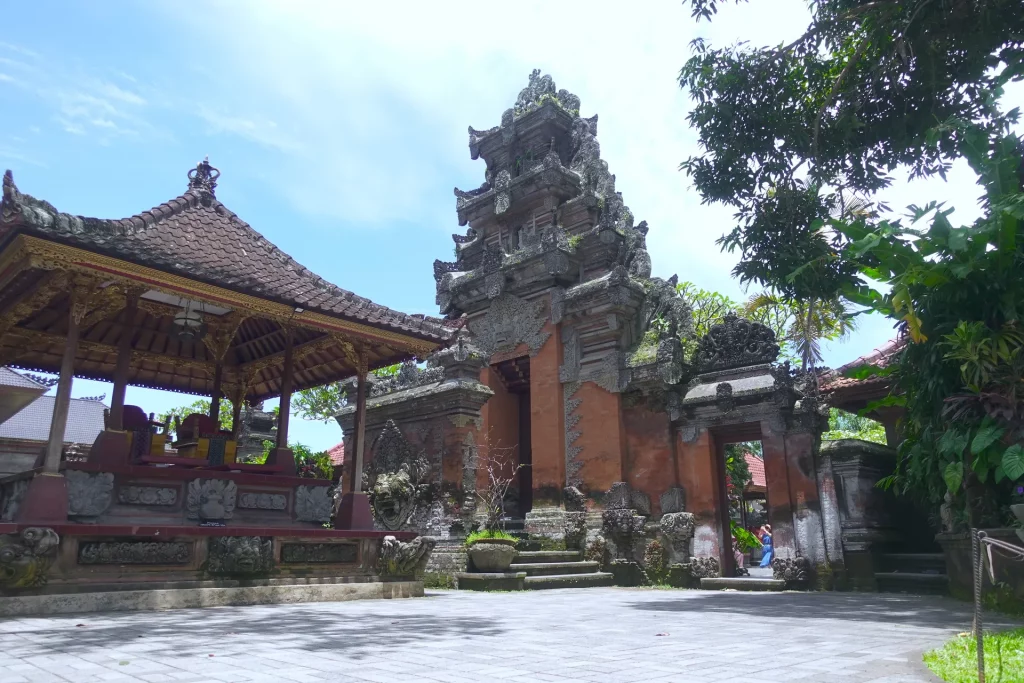
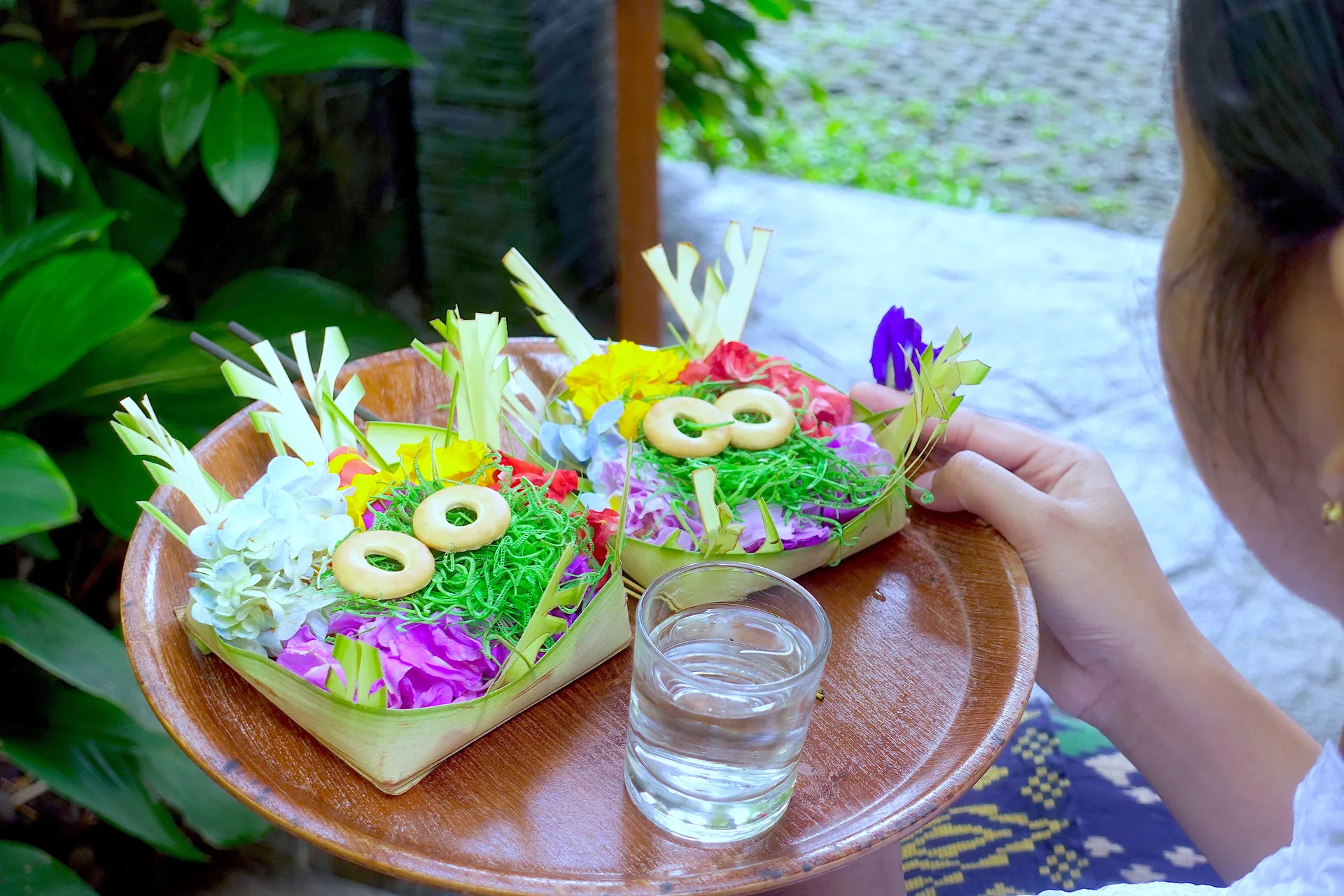
Temples, or pura, are the heart of Balinese spirituality. Guests often see locals carrying canang sari, small daily offerings of flowers, rice, and incense. These symbolize gratitude and balance between humans, nature, and the divine. Families spend hours weaving palm leaves, arranging blossoms, and cooking ritual foods, reminding everyone of harmony between gods, humans, and the environment. What may look like a simple gesture is in fact a profound act of devotion. Guests are welcome to observe respectfully, wearing sarongs and sashes, and maintaining silence during prayers. To witness these offerings is to see how spirituality permeates even the most ordinary moments of Balinese life.
Rice fields are equally sacred. The subak irrigation system is not only a practical method of farming but a spiritual practice tied to water temples and fertility rituals. Planting season begins with ceremonies asking for blessings of rain and growth, while harvest season is marked by offerings of thanks to Dewi Sri. Just as rice grows, matures, and is harvested, so too is human life seen as a cycle of birth, growth, and death. Agriculture and spirituality are inseparable, and the rice fields themselves become a living temple. For visitors walking through these terraces, the sight of farmers placing offerings at the edge of a field is a reminder that every grain of rice carries spiritual meaning.
Among the countless rituals, Galungan and Kuningan stand out as the most significant. Galungan celebrates the victory of dharma, or good, over adharma, or evil. Families prepare by erecting tall bamboo poles called penjor, decorated with coconut leaves, fruits, and rice, symbols of prosperity and gratitude. Ancestors are believed to visit their homes during this time, and offerings are made to welcome them. Ten days later comes Kuningan, marking the return of ancestral spirits to heaven. Special offerings include yellow rice, or nasi kuning, symbolizing purity and gratitude. Families gather in temples to pray for blessings and balance in life. These ceremonies are not only spiritual but also social, bringing communities together in shared preparation and celebration. Streets lined with penjor and homes filled with offerings create a festive atmosphere that visitors cannot help but feel part of, even as observers.
Every ritual reflects the Balinese philosophy of Tri Hita Karana, the harmony between humans, nature, and the divine. Ceremonies ensure continuity, connecting generations and keeping ancestors present in family life. They are cultural expressions that define Balinese identity, shaping the life cycle of society. Birth rituals welcome new life with offerings, marriage ceremonies bind families and communities, and death rituals such as Ngaben, the cremation ceremony, release the soul for reincarnation. Agricultural rituals ensure food security and community cooperation. Together, these practices weave a social fabric where spirituality, family, and community are inseparable.
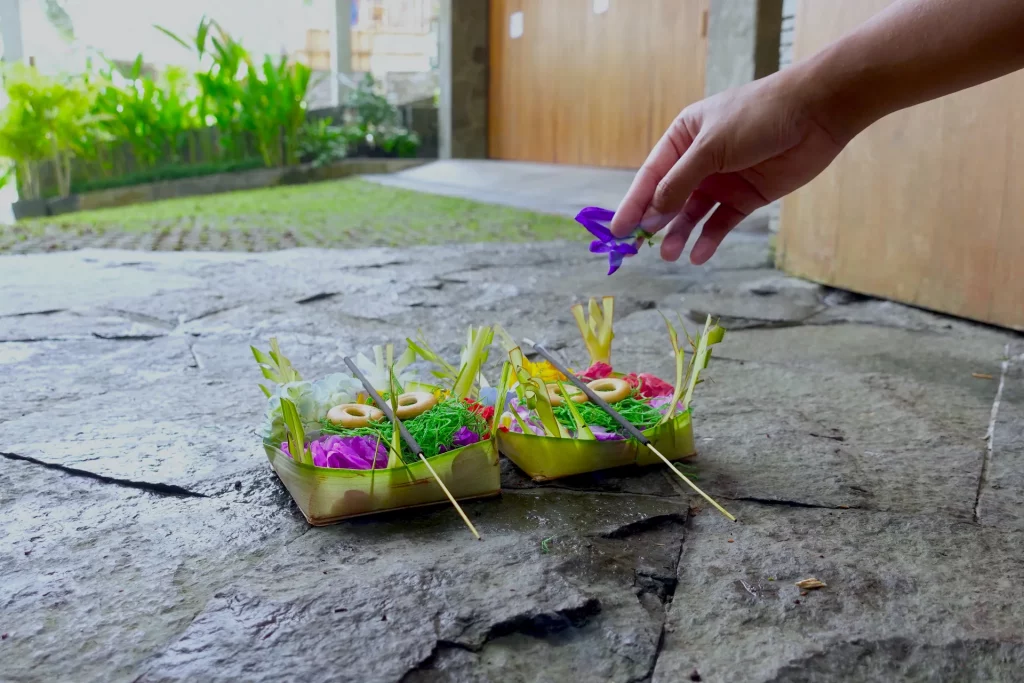
For guests, understanding ceremonies means appreciating Bali beyond its tourist image. When you see penjor lining the streets or women carrying offerings on their heads, remember that these acts are not performances but living traditions. Respectful observation enriches the experience, and participation, when invited, is a privilege to connect with Balinese values. Learning about these traditions is a way to honor the culture and carry home a deeper understanding of Baliʼs soul.
To walk through Bali with awareness of its ceremonies is to see the island differently. The rhythm of the calendars, the devotion in temple offerings, the sacredness of rice fields, and the joy of Galungan and Kuningan all reveal a society where spirituality is not separate from daily life but its very foundation. For visitors, this gentle guide is an invitation to look beyond the surface, to witness the harmony of Tri Hita Karana in action, and to leave with a sense that time in Bali flows not only through days and months but through cycles of devotion, gratitude, and renewal.